
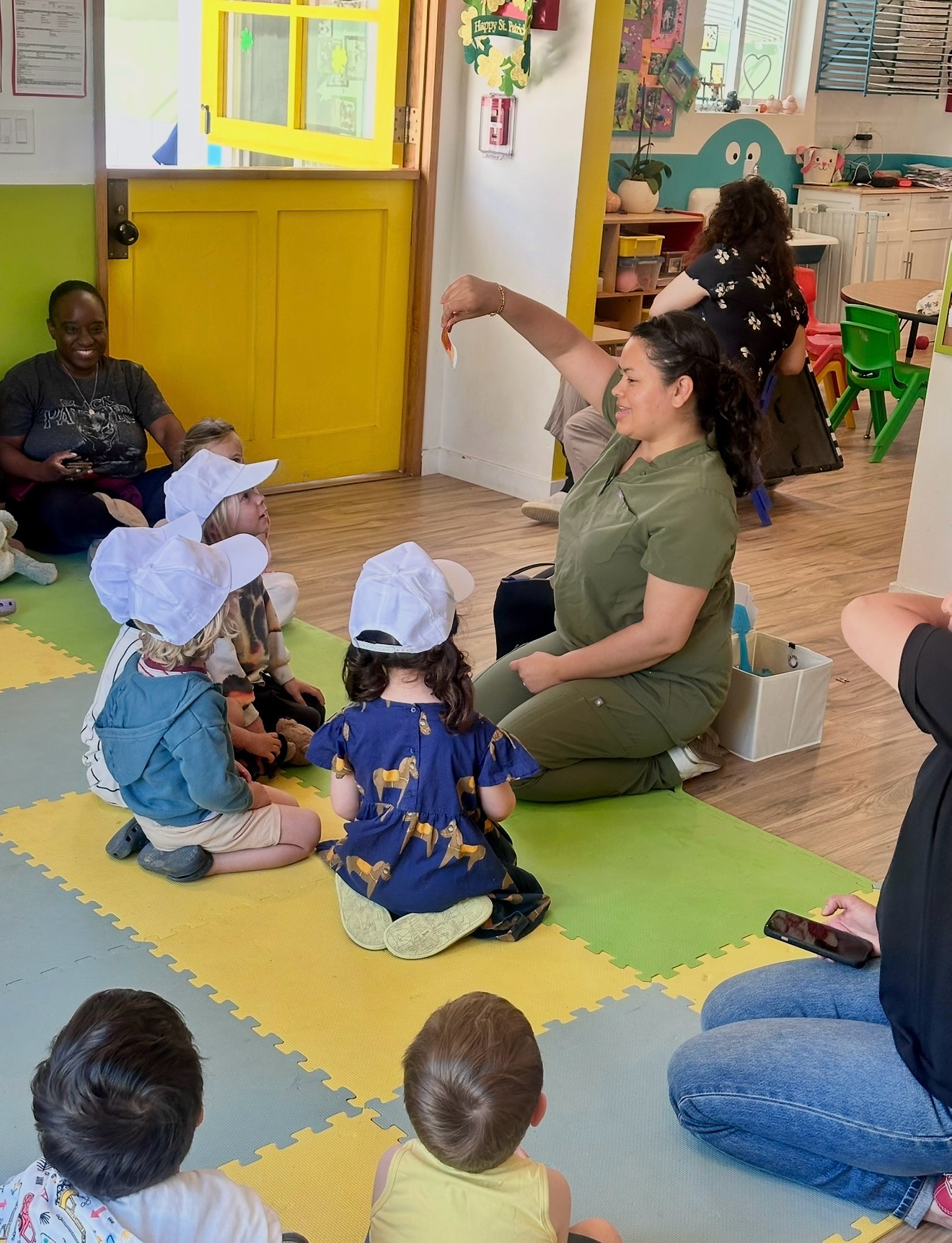
How to Brush Your Toddler's Teeth Without a Battle
If you've ever wrestled a toddler just to brush their teeth, you're not alone.
As a mom of two energetic boys and a board-certified pediatric dentist in Atwater Village, I've lived toddler toothbrushing from both sides — helped hundreds of families through it at Oui Smile Pediatric Dentistry, and had plenty of nights at home where brushing my own kids' teeth felt like an Olympic event.
It gets better. And there are ways to make it easier without giving up on protecting your child's smile.
Why Brushing Matters From the First Tooth
"They're just baby teeth — do I really need to brush already?"
Yes. The moment that first tooth erupts, it's vulnerable to cavities. And by then, most babies are eating solid food, which means sugars and carbs are already feeding the bacteria that cause decay.
Nighttime brushing matters most of all. Saliva production drops while we sleep, and saliva is what washes away food, neutralizes acid, and keeps cavity-causing bacteria in check. Less saliva overnight means bacteria get a much easier shot at your child's teeth.
My golden rule: after the last brush of the night, nothing but water. One habit, significant drop in cavity risk.
Why Your Toddler Hates Brushing (and What to Do About It)
Before trying every trick in the book, figure out why they're fighting it — the reason usually points to the fix.
Are they just too tired?Sometimes it's not the brushing, it's the bedtime. An overtired toddler turns any task into a battle. Try moving bedtime up 20–30 minutes, or starting the routine a little earlier. A less exhausted kid is a more cooperative one.
Could it be sensory?Some kids genuinely dislike a texture or flavor. Worth experimenting with a three-sided toddler toothbrush, a Collis Curve brush, extra-soft bristles, a different toothpaste flavor, or an unflavored option if strong mint or fruit is the problem.
Do they just want independence?This is the one I see most. Toddlers want to do it themselves — so let them. I use "you brush, I finish": let your child go first, cheer them on, then step in with something like, "You did such a great job — I just noticed a few teeth in the back, let me help you get those." Kids respond better to inclusion than to force. Keep in mind, most children don't have the coordination to brush thoroughly on their own until around age 7–8 — parental help isn't optional until then, it's expected.
Make It a Game
Toddlers learn through play, so let brushing be play:
- Turn the toothbrush into an airplane
- Bring in the "tickle monster" for every tooth
- Let a favorite stuffed animal brush first
- Sing a brushing song
- Use a two-minute timer or a favorite song as the clock
- Brush together in the mirror
One of my boys loved switching roles entirely — he'd brush my teeth while I brushed his. Not exactly clinical technique, but it worked.
When Nothing Works
Some nights, your toddler will refuse. Every game, voice, and distraction fails.
Here's the part that matters: don't skip it. It doesn't have to be perfect — it just has to get done. Consistency, not perfection, is what protects your child's smile.
My Favorite Trick: Brush Lying Down
One technique that's worked surprisingly well in our house: laying my child down on the couch or bed and brushing from above.
It gives me a clear view of every tooth, easier access to the back, a more stable head to work with, and less chance of an accidental poke to the gums or cheek. It's also the same positioning many pediatric dentists use during exams — for the same reason.
Progress Over Perfection
Some nights are easy. Some are messy. Some nights you'll genuinely wonder if a single tooth got brushed. That's okay.
Your child doesn't need a perfect parent — just one who keeps showing up and makes oral health a priority. That consistency is what builds habits that last.
Looking for a Pediatric Dentist in Los Angeles?
At Oui Smile Pediatric Dentistry, we know every child is different — whether yours loves brushing or fights it nightly, we're here with practical guidance and gentle, judgment-free care. We proudly welcome families from Atwater Village, Silver Lake, Los Feliz, Glendale, Eagle Rock, Highland Park, and the surrounding LA communities.
A healthy smile starts at home, and we're glad to be part of the journey.
Schedule Your Child's First Visit online or give us a call!
FAQs
Do I really need to brush my baby's teeth before they have many?Yes — from the moment the first tooth erupts. It's already vulnerable to cavities, especially once solid foods are introduced.
Why is nighttime brushing more important than daytime?Saliva production drops during sleep, and saliva is what naturally clears food and neutralizes acid. Less saliva overnight means more opportunity for cavity-causing bacteria.
At what age can my child brush their own teeth?Most kids don't have the coordination to brush thoroughly alone until around age 7–8. Until then, a parent should always finish the job.
My toddler refuses to brush — what should I do?Figure out why first — tiredness, sensory dislike, or a desire for independence usually explains it. If nothing works on a given night, don't skip it; an imperfect brush is still better than none.
What if my toddler hates the toothbrush or toothpaste?Try a different bristle type (a three-sided or Collis Curve brush), or a different flavor — including unflavored, if strong mint or fruit is the issue.
Related Posts
Back-to-School Dental Checklist: Is Your Child Ready for a Healthy Smile?
How to Brush Your Toddler's Teeth Without a Battle
.jpg)
Sleep, Airway & Early Ortho Evaluation: What Every Parent in Los Feliz Should Know