
.jpg)
Sleep, Airway & Early Ortho Evaluation: What Every Parent in Los Feliz Should Know
As a mom of two, I understand why most parents book dental visits. We want clean teeth, no cavities, everything healthy.
But as a board-certified pediatric dentist, I know a routine exam is doing far more than that. I'm watching how your child breathes at night. How their jaw is growing. Whether their bite is developing the way it should. Whether there's room for the teeth still coming.
During my two-year pediatric residency at USC, I trained alongside orthodontists to catch these signs years before braces would ever be on the table. That training is still the lens I use on every child who walks into my Atwater Village pediatric dentist office.
Is Your Child a Mouth Breather? What That Might Mean
Here's something most parents don't expect their dentist to ask about: sleep.
Breathing shapes the face. A child who mouth-breathes, snores, grinds their teeth, or sleeps restlessly may be dealing with an airway issue — and airway issues can quietly steer how the jaw and bite develop.
At every visit, I'm screening for:
- Mouth breathing
- Snoring
- Restless sleep
- Teeth grinding
- Chronic nasal congestion
- Enlarged tonsils
None of these automatically means something's wrong. But together, they're pieces of a puzzle I don't want to miss. If I see a pattern, I'll talk with you about looping in your pediatrician or a sleep specialist. Catching this while your child is still growing gives us options we won't have later.
If any of this sounds familiar, it's worth a conversation — not a wait-and-see.
When Should My Child Have an Orthodontic Evaluation?
A lot of Atwater Village, Los Feliz, and Glendale parents assume orthodontics waits until all the adult teeth are in. It doesn't.
The American Association of Orthodontists recommends an evaluation around age 7.
That doesn't mean braces at 7. Most kids just need monitoring while they keep growing. But for a smaller group — crossbites, real crowding, jaw discrepancies — early treatment, called Phase 1 orthodontics, can:
- Guide jaw growth while there's still room to guide it
- Correct crossbites
- Create space for adult teeth
- Improve bite function
- Shorten or simplify treatment later
Sometimes the right move is simply watching, at the right time, with someone who knows what to watch for.
Thumb Sucking, Pacifiers, and Your Child's Bite
Short version: it depends on how long the habit sticks around.
Most kids stop on their own with no lasting effect. But a habit that continues for years can start reshaping the upper jaw — leading to crossbites, open bites, or crowding. If your child is still thumb sucking past the toddler years, we've written a full guide on when and how to help them stop: [When Should I Stop My Child's Thumb Sucking or Finger Sucking?]
Will There Be Room for the Adult Teeth?
If your child's adult teeth look enormous next to the baby teeth they're replacing — that's normal. Adult teeth are wider by design, so early crowding is expected, not alarming.
I'm tracking jaw growth and available space at every visit, and X-rays, when appropriate, let us see what's developing under the gumline before it becomes a bigger problem.
Why Early Visits Matter
I get it — "we'll deal with braces later" is an easy thought to have. But growth is the one advantage your child has right now that won't last. Once the jaws finish developing, those windows close.
Even if your child never needs early treatment, having someone track that growth means we catch things early instead of managing them later. That's the part of this job I love most — we're not just cleaning teeth, we're guiding how a smile grows up.
Comprehensive Pediatric Care in Atwater Village
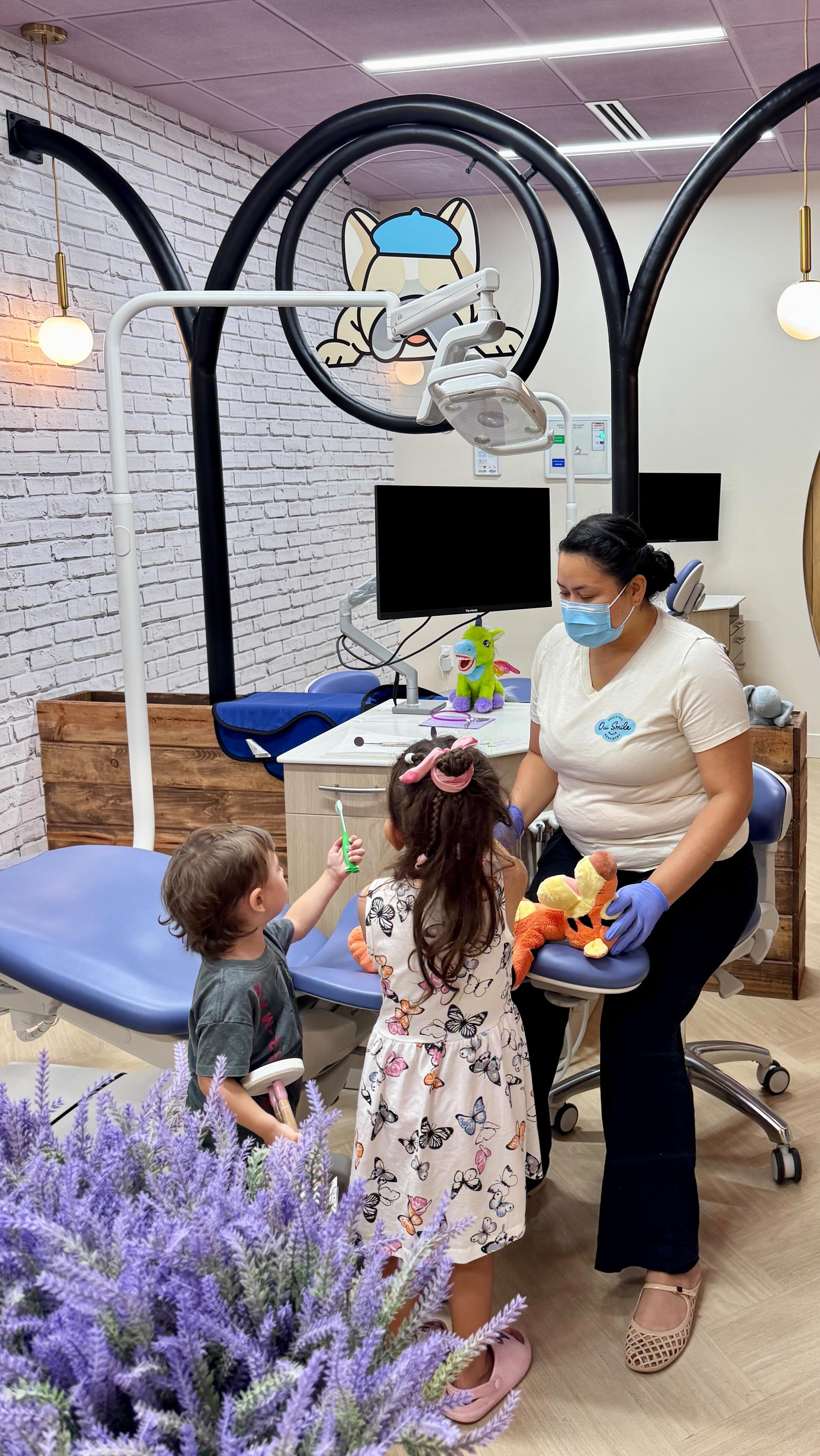
At Oui Smile Pediatric Dentistry, every exam looks at the whole child — oral health, jaw development, bite, airway, habits, and growth, together. Whether your child is one or about to lose their first tooth, we're watching for the right things at the right time — for families across Atwater Village, Los Feliz, and Glendale.
FAQs
What is a pediatric sleep dentist? A pediatric dentist trained to screen for signs of airway and sleep issues — mouth breathing, snoring, restless sleep — that can affect a child's jaw and facial growth. It's part of a routine exam, not a separate scary specialty.
Does my child need a sleep or airway evaluation? If your child mouth-breathes, snores, grinds their teeth, or sleeps restlessly, it's worth mentioning at their next visit. These signs don't always mean a problem, but they're worth a look.
At what age should my child see an orthodontist? Around age 7, per the American Association of Orthodontists — well before most kids need braces. It's about monitoring, not necessarily treatment.
Can thumb sucking really affect my child's teeth? Yes, if it continues for several years. It can lead to crossbites, open bites, or a narrow upper jaw. Most kids who stop early have no lasting effects.
What is Phase 1 orthodontics? Early treatment, usually around age 7–10, aimed at guiding jaw growth and creating space for adult teeth — often shortening or simplifying orthodontic treatment later on.
Schedule a Sleep & Airway Evaluation at Oui Smile in Atwater Village. We serve Los Feliz, Glendale and surrounding areas, schedule online or give us a call.
Related Posts
Back-to-School Dental Checklist: Is Your Child Ready for a Healthy Smile?
How to Brush Your Toddler's Teeth Without a Battle
Sleep, Airway & Early Ortho Evaluation: What Every Parent in Los Feliz Should Know